What Happened in Museums This Week? May 18 – 24

Standard

900 Artifacts Recovered

National Museum Unveils Haul of ‘Looted’ Artefacts

The National Museum of Ireland today unveiled a recently recovered collection of some 900 artefacts which it said had been looted from historical sites around Ireland by “treasure hunters” using metal detectors.

Many of the artefacts were found by police in England following a tip-off from the British Museum after a hoard of medieval items was illegally taken into the jurisdiction. They were reclaimed in the Norfolk area. To read more, click here.

Google Art Project Grows

Kuwait Museum Joins Google Art Project

Dar Al Athar Al Islamiyyah (DAI) museum in Kuwait on Tuesday said that it was adding three high-resolution artworks from their collection to the Google Art Project.

The high-resolution images of “Timur Ruby”, a cobalt blue glazed jar and a carved limestone relief, allows art lovers the discovery of minute aspects of paintings they may never have seen up close before. To read more, click here.

Guggenheim in Wales?

Guggenheim Museum Proposed for Wales

There are proposals to bring a Guggenheim museum to Wales in a bid to replicate the success of the iconic art gallery in Bilbao in Spain.

The group behind the plan say the museum, which would be backed by the prestigious Guggenheim Foundation in New York, could transform Wales to an international cultural destination.

The idea came after a plan to open a Guggenheim in Helsinki fell through. To read more, click here.

Hirshhorn Director to Resign

Hirshhorn Director Plans to Resign After Board Splits on ‘Bubble’ Project

Richard Koshalek, the high-profile director of the Hirshhorn Museum and Sculpture Garden, announced his decision to resign by the end of the year after the Hirshhorn board’s split vote Thursday on the fate of the Seasonal Inflatable Structure project, informally known as the “Bubble.” To read more, click here.

Madoff at the Museum

Madoff Trinkets are Crime Museum’s Latest Attraction

Bernie Madoff has joined yet another rogues gallery, this time an actual museum gallery. In cooperation with the FBI, his victims and members of the Madoff family, the National Museum of Crime & Punishment this week opened a permanent exhibition devoted to one of the headlining villains of the Great Recession.

“He is the No. 1 public enemy for financial crime,” said Janine Vaccarello, the curator of the Madoff exhibit and chief operating officer of the five-year old crime museum in Washington D.C. “He was a serial killer of the financial industry.” To read more, click here.

Muppets Take Queens

Muppets Creator Henson’s Items Head to NYC Museum

The Muppets may have taken Manhattan, but they’re getting a spiffy new home in Queens.

Kermit the Frog, Miss Piggy, Bert and Ernie of “Sesame Street” fame, the stars of “Fraggle Rock” and other puppets, costumes and items from throughout Muppets creator Jim Henson’s career have been donated to the Museum of the Moving Image, which is building a new gallery to house them, the institution announced Tuesday. To read more, click here.

Nat Geo Sacred Places

Indian Caribbean Museum in Nat Geo list of 500 Sacred Places

The Indian Caribbean Museum, described as “a national treasure, a window to the past, and an opportunity to see history come alive”, has been cited by a National Geographic publication that showcases 500 of the world’s most powerful and spiritual places and guides travellers who wish to visit them.

“This is a fitting recognition in just seven years of our existence, especially as we celebrate the 168th Indian Arrival Day May 30,” Sansbhan Jokhoo, the curator of the museum that serves as a link between indentured Indian labourers and the present, told IANS. To read more, click here.

Paula Deen Museum?

Hey, Y’all, Paula Deen Museum in the Works

Cork, Ireland, already has the butter museum. But Albany, Ga., might soon have the next-best thing: The Paula Deen Museum.

The Albany Herald reported that the love-her-or-love-to-hate-her Southern chef’s museum would be housed in her childhood home. The venture has been led by B.J. Fletcher, an Albany businesswoman, and Deen’s former husband, Jimmy Deen. To read more, click here.

Record Breaking Purchase

Britain’s Tate Museum Sets $34 Million Record for Constable Painting

The Tate Britain museum bought 19th century English painter John Constable‘s masterpiece “Salisbury Cathedral from the Meadows” for 23.1 million pounds ($34.75 million), making it one of the most expensive British paintings ever sold.

The painting, dated 1831, of the towering cathedral in the middle distance under an overcast sky shot through with a rainbow had been at risk of being sold abroad and its sale sets a record for Constable, the Tate said on Thursday. To read more, click here.

What headlines caught your eye this week?

Meet a Museum Blogger: Lorie Pierce

Standard

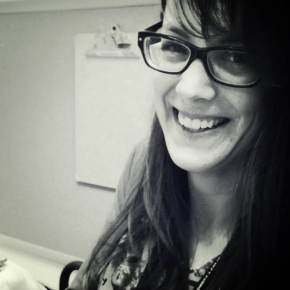
After careers in urban planning, health care and medical research, Lorie Pierce made a conscious choice to work somewhere beautiful, engaging and always thought provoking: the Royal Ontario Museum in Toronto. Starting as a volunteer in 2005, she now balances her volunteer roles in Outreach children’s programming with a part-time staff position in the Education Department. While the “fossils of Early Life in the Mid-Cambrian Burgess Shale” are her passion, she is equally intrigued by topics ranging from ancient civilizations to meteorites, birds and bats. Lorie has also trained in Reminiscence Therapy in London, England and is completing a Certificate in Museum Studies with the Ontario Museum Association.

Lorie Pierce at ROMDo you work in a museum? Tell us about your job.

You will find me at the Royal Ontario Museum in Toronto, Canada. I wear two hats at the museum – as a volunteer and as a part-time Gallery Facilitator in the Education and Programs Department. Both my volunteer and paid positions involve a variety of activities onsite and offsite including exhibit tours, school tours, assistance for programs, touch table staffing, promotions, children’s program development and co-ordination, scavenger hunt staffing, assisting with school group organizing, and Invertebrate Palaeontology database entry. Suffice to say, I am never bored.

What is your educational background?

My university degree is in urban planning, which gave me an excellent grounding in research, strategic planning, human geography, and history of urban spaces. In the past few years, I have been pursuing a Certificate in Museum Studies from the Ontario Museum Association.

What was your sticky moment?

A love of Natural History came early. While watching my father build a rock wall in our suburban backyard, I noticed seashells embedded within the quarry stone. At four years old, I understood what types of animals lived on land and which lived in the sea. This mash up of sea life within rock was my earliest paradigm shift. Fossils have fascinated me ever since and I have hunted them both inside and outside of museums.

What is the name of your blog? How long have you been blogging?

Museum Talk.

Just over a year ago, I took on the responsibility of designing and coordinating a museum outreach program for families of children being treated for major illness. We hold the mini-museums at their 80 suite home-away-from-home which was built nearby the Hospital for Sick Children. I started blogging at the same time.

What do you blog about? Why?

Museum Talk is a way for me to show the process I go through in deciding how to share aspects of our comprehensive collections (both Natural History and World Cultures) in a fun and engaging way. I blog so volunteers and staff within the museum can see what I am working on, but also to share ideas with the larger museum community, who may have similar aims.

What’s your go-to blog?

@ROMkids – Kiron (read his Museum Blogger here) is my eyes and ears both inside and outside the museum. Plus, since we share a love of Palaeontology, I know I will hear the latest Palaeo news through his tweets.

What’s the last exhibit you saw?

Revealing the Early Renaissance: Stories and Secrets in Florentine Art at our sister institution, the Art Gallery of Ontario.

If you didn’t work in a museum, what would you be doing?

I’d be somewhere being creative. Currently, I am writing an adventure book.

Do you tweet? Why or why not?

I tweet @CreativeLorie and follow a few sites avidly for the amazing links they provide. My tweets are infrequent but I am definitely warming up to using Twitter more, especially because I love being retweeted!

If you were forced to spend the rest of your life in a library, a museum or a zoo, which would you choose and why?

An aquarium. The world’s oceans are an amazing new frontier that intrigues me. Plus I am convinced I once had a past life in the Cambrian Seas.

What do you see as the biggest challenge (or opportunity) facing museums today?

Understanding why people come to museums and how to best connect with them when they do, so that we can build on what they value in the experience. In addition to seeking education and entertainment, I believe our clientele also connect to museums on a level of reminiscence. That there are objects in our collections that remind them of their own lives, their families, their ancestral homes, their travels in a way that increases their sense of belonging and self-worth. This is an area I feel should be investigated and enhanced through how we engage the public.

Share one piece of advice for those interested in working in the museum field.

Get to know a curator or two. Don’t limit yourself only to areas of the museum you think you are most interested in. Be open to all aspects of museum life. There could be something amazing around the corner you never conceived of.

Thanks for participating in Meet a Museum Blogger, Lorie!

In case you missed it, Lorie blogs at Museum Talk.

Do you have any additional questions for Lorie regarding her profile above? Feel free to start a conversation in the comments below or reach out to her directly on Twitter. Her Twitter handle is @CreativeLorie. I highly encourage you to use the #MuseumBlogger hashtag. TY!

Are you interested in being profiled or know someone who would be? Send an email to MuseumMinute@gmail.com.

What Happened in Museums This Week? May 11 – 17

Standard

Barbie Museum Protest

Protests Mar Barbie Museum Opening

The opening of a museum in Berlin celebrating Barbie dolls was disrupted Thursday by protesters who say the popular doll distorts girl’s image of their own bodies.

“Fewer and fewer girls feel comfortable in their own skin, with eating disorders having increased drastically because of figures like Barbie,” said Stevie Schmiedel from Initiative Pink Stinks, which campaigns against the promotion of gender roles in advertising and products. To read more, click here.

Bicyclists Rejoice

Hundreds of Bicyclists Pour through National Museum in Amsterdam Again After 10-year Detour

Guards removed the final barriers blocking the way, and a cheer went up from the crowd. Moments later, a small army mounted on bicycles of all shapes and sizes eagerly stormed the path that leads straight through the heart of the Netherlands’ newly renovated national museum. To read more, click here.

New Museums in Dubai

Two New Museums to Open in Al Shindagha in Dubai

Two more museums are set to open within the year to educate the public on the country’s different variety of clothes and the types of ornaments used in historical buildings.

Speaking yesterday at a municipality event to commemorate International Museums Day, Rashad Bukhash, Director of Architectural Heritage Department at Dubai Municipality, explained that the clothes museum copies a similar idea of the Victoria and Albert Museum in London, which displays the timeline of clothes used throughout history. To read more, click here.

Newseum Reverses Decision

Newseum Reverses Decision to Honor Hamas-Linked Journalists Following Pressure

The Newseum announced Monday that it will not honor two cameramen killed while working for Hamas-run Al-Aqsa TV, reversing a Friday decision to include them on a memorial for fallen journalists following pressure from conservative media outlets and organizations supporting Israel. To read more, click here.

Proposal for OK Museums

Okla. Senate Unveils $80M plan for 2 New Museums

The  Oklahoma Senate unveiled a new plan on Thursday to divert $80 million in state  sales and use taxes over a four-year period to pay for the completion of an  American Indian museum in Oklahoma City and build a new popular culture museum  in Tulsa.

A  Senate budget committee approved both measures, which next must be considered by  a similar committee in the House, where the proposals are likely to face  strong resistance. To read more, click here.

PTM CEO Resigns

Please Touch Museum Chief Resigns

Please Touch Museum president and CEO Laura Foster is stepping down. Foster, leader of the museum for five years, said Tuesday that it was a good time for her to move on. To read more, click here.

Request to Examine Khmer Antiquities

Cambodia Presses U.S. Museums to Relinquish Antiquities

Buoyed by the Metropolitan Museum of Art’s decision this month to return two stolen statues, Cambodia is asking other museums to examine any Khmer antiquities they acquired after 1970, when a 20-year period of civil war and genocide gave thieves free range to loot the country’s ancient temples. To read more, click here.

Slave Cabin to NMAAHC

Antebellum Slave Cabin in S.C. to be Restored for African American History Museum

Curators at the Smithsonian’s National Museum of African American History and Culture are working with restoration experts to dismantle an antebellum slave cabin on Point of Pines Plantation in Edisto Island, S.C. The cabin was donated to the museum last month by the Edisto Island Historical Society. The two-room cabin, which measures 16 by 20 feet, is believed to be in its original location and will become part of the “Slavery and Freedom” exhibition in Washington when the museum opens its doors in 2015. To read more, click here.

What headlines caught your eye this week?

Copyright and the Digital Generation

Standard

Last week I attended a Fair Use and Digitization workshop at Bowling Green State University. We learned a lot about copyright (does that make you cringe? I did, just a little.) and Fair Use. The workshop provided some excellent food for thought regarding Fair Use (you can read the ARL Code of Fair Use Best Practices here), Orphan Works, Digitization, and Copyright Risk Assessment. While I could go on for days about access (I can’t lie, I take a pretty liberal stand on the subject) I want to connect the conversation of copyright and photography policies at museums with this week’s ARTnews article, “Why Can’t We Take Pictures in Art Museums?” and Wired Magazine’s recent article, “1993”.

We’ve all been there; well, most of us have. You’re looking… no, you’re staring… no, you’re getting lost in a piece of art. Maybe it’s an artifact, maybe it’s an old document, but you get the idea. You’re mesmerized. And you feel the need to grab your smart phone and capture this moment (this is totally different than that silly HTC First commercial, by the way. This isn’t a, “Us girls going dancing tonight” moment, it’s a “Girls, look at this beautiful piece of art. Wish you were here” moment). If you’re a museum professional, you may pause and respectfully (or furtively) look for a guard. You may even seek one out to ask it photos are permitted. Or maybe without a guard in sight you quickly capture the photo and stealthily put your phone away like nothing happened. Whatever the case, you feel that certain tug, and inherently you want to take a picture. You want to remember your experience. You want to capture your experience. You want to share your experience.

I am fascinated by the range of photography policies that exist out there. While some museums encourage photography, others do not permit it at all. Special/traveling exhibitions can be a different beast all together. Why so many rules?

Copyright.

The simple fact is that museums do not necessarily own all of the collections they display, or the owner of the material did not own the copyright when the transfer occurred, which can be a difficult concept to understand if you don’t live and breathe in the museo-world. It’s a little like having your rich uncle’s Aston Martin in your garage, with no keys. While you can appreciate it, and are excited to show it to all of your friends, it is not yours. You can’t drive it (this particular metaphor is for my husband – cars are a concept he understands much better than museums). Also, please note: we do not have a rich uncle, no matter how much we try to find one.

The ARTnews article, “Why Can’t We Take Pictures in Art Museums,” does a great job of outlining the “loosening” of photography policies, quoting Nina Simon, Alisa Martin, and Brooke Fruchtman (among others), discussing restriction,  enforcement, social media, and the “read-write culture” driving these conversations. The article also shares an extreme instance in which a visitor, took pictures throughout the Indianapolis Museum of Art (even in the restricted areas) and then attempted to sell them online. In point of fact, the risks are real, but so are the realities. In the age of Tumblr, Google Art Project, OpenGLAM, Flickr, Instagram, and participatory culture in general (not to mention the internal push many museums feel themselves to use these tools to expand the reach of their collections) – how can museums best gauge and manage a copyright risk assessment plan?

Which brings me to “1993.” This article is fascinating – and a must read. This generation sees the world radically differently from any before it. Even as a Millennial myself, the young people profiled in this article, nearly 10 years younger than me, are already slightly strange to me (in a good way).  They are unabashed technological natives, even beyond my own tech-savvy peer group, who not only share experiences, they create new digital experiences that enhance their “real world” lives with no inherent separation. The digital world and the “real world” exist on the same plane – and always have. There’s no struggle to preach unification or importance – it just is. Did you catch that? They take movers and shakers to a whole new level. And while it is extremely difficult to characterize an entire generation (maybe with the exception of those pesky Gen X-ers – Ha! I kid, I kid!) “1993” is a force to be reckoned with. They aren’t scared of copyright. They don’t even seem to recognize it as a reality. What we characterize as a “derivative copy” is a meme, snapchat photo/comment, or the final piece to their multi-media collage of awesome. If you haven’t read this article, please do. And you’ll see why author Jerry Adler proclaims, “…get ready to play by their rules.”

So, what is the risk of taking photos at an art museum? What is your institution’s photography policy? Why is it in place? Do you agree with it or disagree? While I certainly don’t see copyright going away – we all deserve credit for our unique, creative works, right? – the rules of copyright may be forced to change in the face of the coming, even more connected, Digital Generation.

Meet a Museum Blogger: Paolo Viscardi

Standard

As a child, Paolo Viscardi had a morbid fascination with death and a penchant for skulls, offering a limited range of vocations for his future. After discounting a career in a death metal band (no musical talent) or a job as an assassin (a saturated market in the early 90’s) he opted to train as a palaeontologist. This dubious loss to music and espionage was a questionable gain for the academic world and it wasn’t until Paolo managed to break into the museum sector that he finally found his true vocation. It’s where he also found his talented, capable and super-humanly tolerant wife Melissa – who has not only allowed a dead and bloody albino badger to go in the fridge at their home, but who actually suggested putting it in there.

Paolo is a representative of the Natural Sciences Collections Association and a Fellow of the Linnean Society sitting on the Taxonomy & Systematics Committee. For fun Paolo is involved in a range of science engagement activities. He is an administrator on the Biology Q&A site Ask A Biologist, he runs a monthly science communication event called PubSci, he delivers talks and performances on a variety of natural history topics and he runs the blog Zygoma.

Paolo Viscardi smiling (with horns)Do you work in a museum? If not, where do you work? Tell us about your job.

I work at the Horniman Museum and Gardens in Southeast London. I’m the Deputy Keeper of Natural History, responsible for the curation of the osteology (bone), geology (rock) and palaeontology (fossil) collections – that’s about 180,000 specimens in total. I identify and research specimens, deal with enquiries, provide access for researchers and artists, write interpretation for objects, develop partnerships and collaborations with other institutions and provide input on issues relating to policy and legislation regarding collections.

What’s your educational background?

I studied Biology and Geology at Bristol University as an undergraduate and my postgraduate research at the University of Leeds was on the biomechanics of bird flight. Many of my research projects involved museum specimens and during my postgrad I taught a lot of practical courses to undergraduates using the collections in the departmental museum, which gave me the experience needed to get my first paid museum job at the National Museum of Ireland – which is where my real education started!

What was your ‘sticky’ moment?

According to my mum I’ve wanted to work in museums since I was 4. Seeing the door into the Palaeontology department at the Natural History Museum in London (the one next to the Megatherium specimen) is one of the clearest memories from my childhood – it was at that point I realized there must be people working behind the scenes in museums and that I could be one of them. Of course, I considered other career options when I was growing up, but none of them very seriously!

What is the name of your blog? How long have you been blogging?

My blog is called Zygoma, which is the anatomical name for the cheek bone. Originally it was supposed to feature bones from the Horniman’s collections and to provide an outlet for my irreverent and sometimes cheeky sense of humour.  I’m not sure that the name was particularly relevant in the end, but after more than 4 years it’s probably a bit late to change it.

Zygoma_500x149

What do you blog about? Why?

I mostly blog about bones, since they are my main interest, but sometimes I touch on topics where I think an injection of reason is required. Zygoma has become largely dominated by my ‘Friday mystery object’, which is where I upload a photo of a specimen and people try to identify it (usually successfully), then I post an answer on the following Monday.  This format was adopted in July 2009 and I’ve done it every week since then – although I’m planning to change the format slightly after my 200th object. This format has allowed an active community to become established and it’s been really rewarding to interact with the fascinating people who regularly visit Zygoma. Hopefully they’ve enjoyed it and feel more confident about identifying and discussing bones.

What’s the nicest comment you’ve ever received?

Comments are one of the things that I like most about blogging – they provide the feedback mechanism that really differentiates a blog from a website and they also provide the engagement mechanism needed to allow online communities to develop. Usually the comments on my blog are intelligent, interesting and useful, but sometimes they can also be touching, upsetting or just plain bonkers. One of the nicest comments I’ve received came from a young boy called Jake who has been reading my blog since not long after it started.

Back in 2010 Jake said: “I’m just a eight year old boy who has a hobby of bone collecting. I love this bit on a Friday because its awesome and I get to see some stuff I’ve never seen before.”

The best thing about this comment is that Jake (now 11) still gets involved with the mystery object every week, but he also writes his own award-winning blog called Jake’s Bones and he’s in the process of writing what promises to be a brilliant book about bones for other children to enjoy. He recently left another comment on my blog saying:

“The thing I like about your blog is that it’s fun, you don’t use complicated scientific terms (I try not to either), and you find out about skulls and animals from different countries as well as what a skull shape or bone shape actually means for the animal… Thank you for blogging so much ! It inspired me with mine.

That’s one of the nicest comments I could ever hope for!

What’s your most read blog post? Tell us about it.

My most read post is a recent one on misidentification of human remains and the mishandling of this sensitive subject matter by the media. Somehow it managed to get over 20,000 views in 24 hours, which is a lot for me! It wasn’t really focused on museums, although it does use museum specimens as a source of information. The content also deals with issues around the respectful treatment of human remains, which is an area that museum professionals need to consider sensibly and carefully.

Do you tweet? Why or why not?

I’ve been using Twitter under the name @PaoloViscardi since I set up my blog, and I find it to be a really useful resource. Twitter provides a great method of finding out about interesting topics and sharing what I’ve been up to (you would be amazed at the interest generated by a simple tweet about a wet badger). It also provides an effective mechanism for engaging with people and crowdsourcing information.

If you didn’t work in a museum what would you be doing?

I dread to think! Whatever I did, I’d be collecting bones and writing about them in my spare time.

What do you see as the biggest challenge facing museums today?

The current financial crisis is by far the biggest challenge facing museums at the moment. Collections need to be both used now and maintained for future use. For that to happen there is a need for skilled, knowledgeable and experienced staff to work with collections. Unfortunately, financially tough times equate to job losses, and unfortunately some institutions view knowledge and experience (and even collections!) as expendable compared to other public-facing museum activities. Of course, collections are what define a museum, so losing knowledge and experience of collections means losing the ability to effectively use the most fundamental resource available.

Thanks for participating in Meet a Museum Blogger, Paolo!

In case you missed it, Paolo blogs at Zygoma

Do you have any additional questions for Paolo regarding his profile above? Feel free to start a conversation in the comments below or reach out to him directly on Twitter. His Twitter handle is @PaoloViscardiI highly encourage you to use the #MuseumBlogger hashtag. TY!

Are you interested in being profiled or know someone who would be? Send an email to MuseumMinute@gmail.com.

What Happened in Museums This Week? May 4 – 10

Standard

Admission Debate

9/11 Museum will Charge Admission Fee of $20 or More When it Opens in 2014, Officials Say

Faced with hefty operating costs, the foundation building the 9/11 museum at the World Trade Center has decided to charge an admission fee of $20 to $25 when the site opens next year. To read more, click here.

To read my thoughts on the admission debate, click here.

Aquarium Closing

National Aquarium in D.C. to Close September 30

Prepare to say goodbye to some fishy friends. Because of ongoing renovations at the U.S. Commerce Department’s headquarters at 1401 Constitution Avenue NW, the National Aquarium is getting the boot.

The aquarium is set to close Sept. 30. The Herbert C. Hoover Building is currently in the middle of an eight-phase, 14-year reconstruction project set to be completed in 2021. To read more, click here.

Financial Struggle

Chicago’s Famed Field Museum Struggles to Dig Out of a Hole

The economy may be on the rebound, but many cultural institutions are still struggling to regain their financial footing. That’s especially true for one of the country’s most recognized museums — the Field Museum of Natural History in Chicago. Known internationally for its research as well as its exhibits, the Field Museum must pay off millions in bond debt — and toe an ethical line as it does. To read more, click here.

Nazi Bomber in English Channel

RAF Museum to raise Nazi bomber from 1940 Blitz out of English Channel

A British museum has begun the process of lifting the only Nazi bomber to survive the World War II Blitz on London out of its shallow grave — under 60 feet of water and shifting sands under the English Channel. To read more, click here.

New Rothko Museum

Latvia seeks ‘Bilbao effect’ with Rothko museum

The opening of a museum dedicated to US art superstar Mark Rothko in his Latvian birthplace is raising hopes the city of Daugavpils could attract thousands of new tourists and revitalise the economy.

Officials believe the Mark Rothko Art Centre will have a “Bilbao effect” — a term used to describe the pivotal role the Guggenheim Museum played in reviving the depressed Basque metropolis. To read more, click here.

Princess Di Museum Closing

Princess Diana Museum to Close, Contents to go to Sons

The museum Princess Diana‘s family opened in her memory at her ancestral estate will close next year, the British media are reporting today.

The Telegraph quoted a spokesman for Diana’s brother, Charles Earl Spencer, as saying the museum at the family estate, Althorp, would close next August and the contents would be transferred to the custody of her sons, Prince William and Prince Harry. To read more, click here.

Statues to be Returned

Cambodia Hails Return Of Ancient Khmer Artifacts By U.S Museum

Cambodian Deputy Prime Minister and Cabinet Minister Sok An has lauded New York’s Metropolitan Museum of Art (Met) for its recent decision to repatriate two 10th century stone statues to Cambodia, Xinhua news agency reported. To read more, click here.

What headlines caught your eye this week?

The Cost of Memory: The 9/11 Museum Admission Debate

Standard

Last week officials at the National 9/11 Memorial and Museum announced that admission to the museum will cost between $20-$25 when it opens in 2014. The memorial plaza, which opened in 2011, will continue to be free (there is a $2 service fee for online ticket reservations). Not surprisingly, this announcement has turned out to be controversial to say the least. Some common reactions I’ve seen online include a few standard themes:

  • “It’s not a business – it’s a memorial”
  • The admission fee is “disrespectful” or “too much”
  • The admission should be a “suggested donation”

There are also numerous comments regarding why there should be no museum at all, however, in this post I want to focus on cost.

So, should the National 9/11 Memorial and Museum be free?

No.

  • It is not free to operate a museum – especially a museum with a need (and a plan) for heightened security, like this one. The museum will have a significant “cost recovery” period (planning/development, consultants, design, construction, etc.), not to mention the cost of general day-to-day operations (staff, utilities, security). And while the tragedy it commemorates is a public one, the museum itself is a not-for-profit endeavor, without a major endowment (yet) or other source of regular operational funds to keep it afloat; fundraising, grants, AND admission costs are necessary.
  • Museum officials have stated that the museum will be free during certain hours every week and will offer student and senior discounts. There will be opportunities for those who cannot afford the admission price to visit the museum.
  • New York City is home to a lot of museums – both public and private – with a variety of admission price structures; some are free, some suggest an amount, and some, yes, charge $20+. The announced admission price is not unheard of. Given the location, the subject matter and the cost to create (and don’t forget operate) the museum, $20 – $25 seems fair.
  • There is significant precedent. There is a charge to tour the Oklahoma City National Memorial & Museum and the Historic Sites at Pearl Harbor (admission to World War II Valor in the Pacific National Monument is free) – both sites of tragedy, mourning, and reflection.

USA Today quoted Joseph Daniels, President of the National September 11 Memorial and Museum, saying, “We decided that it’s more fiscally prudent to have a straight ticket charge.” Yes. Museums need to be fiscally prudent. Funding is competitive and some of the most respected museums in the U.S. are facing significant cuts (the Field Museum, the Smithsonian Institution, and the Baltimore Museum of Art – just to name a few). While it could be argued that the annual budget projections may not be fiscally prudent – an estimated $60 million/year to operate the museum – the costs are real and the admission price is necessary to assist in covering those costs.

For those arguing on behalf of the families affected by 9/11 and the terror attack in 1993, I might suggest (I’m sure I’m not the first or only) that the museum consider gifting lifetime memberships to the immediate families of the victims, survivors, and responders. It is their experiences, their stories, their loss, their triumphs, and their lives that will be reflected, remembered, and honored in the exhibition halls of the museum for generations to come.

At the end of the day, I believe people will visit the National September 11 Memorial and Museum and will pay admission, regardless of the price – to mourn, to remember, and to pay their respects the thousands who lost their lives, while reflecting on an event that changed our nation forever.

I agree with Daniels when he says, “This [the museum] is something that is going to be important and is going to be worth the expenditure.” I also believe that it is going to be worth the cost of admission, even if that cost is $25/person.  Do you?